


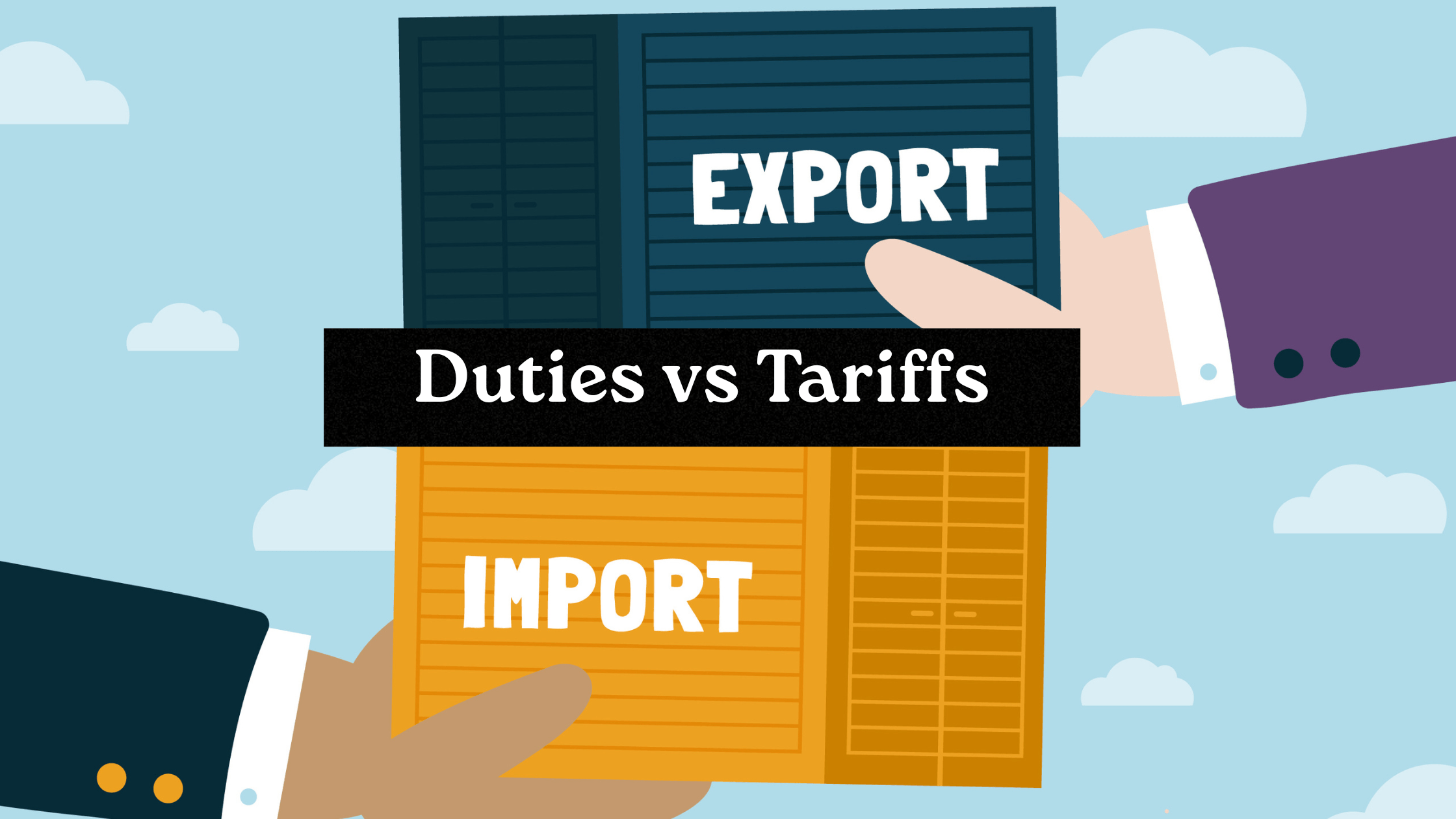
In the domain of international trade, numerous topics cause profound confusion and can adversely impact the overall margins, as duties vs tariffs. Mostly, both of these terminologies are used interchangeably by businesses, although they are treated as different mechanisms in terms of the impact they can have on import/export costs, profitability, and overall supply chain strategy.
</br>
Understanding the key differences between them leads companies to more effective forecasting, smart shipment planning, and more negotiation power with vendors. Understanding this difference is vital, specifically in industries with high-volume trades, where a major decision between air freight vs sea freight can significantly impact costs and customs compliance.
</br>
By working with certified partners like AMQ International, companies excessively rely on IOR/EOR services as they understand the multiple complexities, knowing how duties and tariffs work, and because of that, they are able to build transparent cost structures alongside avoiding other additional expenses. So, let’s start with understanding both of these terminologies, as a thorough grasp of the concepts will lay a strong foundation.
</br>
What Are Duties? A Cost Based on the Goods You Import
In simple words, we can say that duties are treated as a cost on imported goods, imposed by the government itself. This cost is calculated in accordance with the product’s categorisation. Duties are meant to serve multiple purposes, like protecting the domestic industries, encouraging or discouraging a specific category of imports, and lastly, to generate some revenue for the government. Furthermore, the following are some of the widely known factors on the basis of which duties are usually calculated:
- Product value
- Quantity
- Weight/Volume of the shipment
- HS code of classification
- Country of origin
</br>
Even the slightest negligence of mistake can cause multiple disruptions for the business, including several delays and financial penalties. This is one of the core reasons that businesses happen to work with certified and trusted partners for their IOR/EOR services like AMQ International.
</br>
Types of different duties:
Duties are highly complex, profoundly variable, and constantly changing depending upon the trade agreement. For businesses involved in regular importing activities, it is not just some mere knowledge and facts; it is vital for their survival in the market. The following are some of the commonly known types of duties:
- Basic customs duty, which is applied to most goods.
- Excise duty, mostly applicable on specific categories like fuel and alcohol.
- Anti-dumping duty, majorly used to prevent unfair, low-cost imports.
- Counter-travelling duty, to offset subsidies from exporting nations.
</br>
What Are Tariffs?
As highlighted above, duties are majorly transactional and are product-focused; however, at the other end of the spectrum, tariffs are treated as strategic tools by the government for the sake of regulating trade relationships. Tariffs are often undergoing changes abruptly based on politics, diplomacy, and negotiations, not solely based on economic needs.
It is advised to think of tariffs as economic levers. They are used to protect national industries, to discourage imports from specific countries, and lastly, to retaliate against trade practices as well. Very common examples of tariffs include the US-China tariffs on electronics and tariffs on steel and aluminium, etc. Tariffs may be retaliatory, incentive-based, and temporary, but they often increase the landed cost constantly, which in turn increases the element of uncertainty in the global supply chains.
</br>
Duties vs Tariffs: Actual Differences
Businesses that fail to distinguish between duties and tariffs are very likely to fall prey to expensive surprises, especially in the case of volatile geopolitical environments. In simple words, Duties are recurring fees on the imported goods, baked into logistics planning, while on the other hand, Tariffs are usually the unpredictable cost spikes that businesses are supposed to anticipate, strategically.
| Feature | Duties | Tariffs |
| Purpose | Government revenue and product regulation | Economic leverage and trade policy |
| Based on | Product classifications | Specific country and regulations |
| Stability | Relatively stable | Highly unstable |
| Impact | Predictable cost | Potential disruption |
| Risk | Financial penalties, fines etc | Higher unpredictable costs |
</br>
How Duties and Tariffs Influence Shipping Choices?
Businesses that only happen to evaluate shipping cost without taking trade policies into their necessary consideration, then they are missing out on some potential margins, leaving big money on the table. Because duties and tariffs basically shift the whole dynamic, it changes the economics of movement, despite the shipment mode, whether it is air, sea, or land. One of the leading misconceptions nowadays is that faster shipping will lead to higher total costs, but sometimes choosing between air vs sea freight is not about the faster shipment mode; it is more like a tariff optimization strategy. Because it is not just about the freight cost, it is the customs fee, time, and tariffs; altogether, these 3 yield the actual total costs.
For example, for the sake of consolidated shipment, if the inventory is stored abroad, then it can clearly reduce the duty exposure. Followed by which small and high-value items will be more feasible and cheaper to be shipped by air, considering the tariff cost. Similarly, sea freight can be cheaper per container, but the risk may spike, specifically during tariff volatility.
Nowadays, modern supply chains are not built solely on speed; experts greatly emphasise risk management and cost predictability. Because the unpredictability of tariffs significantly influences long-term decisions like manufacturing location, inventory placement, supplier selection, and shipment mode, etc. That is why both duties and tariffs are treated as strategic planning inputs.
</br>
How AMQ International Helps Companies Navigate Duties and Tariffs?
Managing duties and tariffs on your own can be very complex, expensive, and risky. That is why what you need is a trusted and certified partner like AMQ International, we provide state-of-the-art IOR/EOR services to handle:
- Customs clearances
- Duty management
- HS code classification
- Documentation and compliance
- VAT handling
</br>
We support and provide multi-sector organisations with end-to-end control, allowing them to enter markets swiftly with full compliance and a predictable cost structure, alongside providing multiple benefits to companies looking for international scalability.
Is a tariff the same as a duty?
No tariffs are not the same as duties. Duties are the fees imposed by customs authorities on importing goods across geographical boundaries. On the other hand, tariffs are a kind of tax on imports or exports. Experts recommend thinking of tariffs as a special kind of duty.
Who is responsible for paying duties and tariffs during international shipping?
Usually, the importer is responsible for paying the duties and tariffs. But nowadays, businesses choose to outsource these liabilities and compliance to Importer of Records, who usually handle it all. Customs declarations, documentation, and making the payments on the company’s behalf.
How do duties and tariffs impact freight costs and supply chain strategy?
Both duties and tariffs increase the total landing costs of goods, which in turn influence the shipping, sourcing, and pricing. High tariffs can even make companies reconsider the market just to stay competitive, alongside adjusting shipment modes and production.
Why are tariffs unpredictable compared to duties?
This is because tariffs are driven by political and economic decisions. Government changes, trade disputes, or new agreements can easily alter tariffs rapidly, even overnight, creating profound uncertainty for global supply chains overall.